Writer and political analyst / Hassan Faleh
The comparison between the world today and the pre-World War I era is no longer merely academic debate; it has become a strategic warning echoing in international decision-making circles. Escalating tensions between major powers, the accelerating arms race, and the expansion of regional conflicts are all indicators that are reshaping a highly fragile international landscape, one that could turn any limited crisis into the spark for a wider, uncontrollable conflict.
However, the danger of the current phase lies not only in its resemblance to the past, but also in the fact that the world today is both more interconnected and more destructive simultaneously. The Middle East—and Iraq in particular—stands at the heart of these transformations, serving as a testing ground for the new international balance of power.
The Return of the Logic of Conflict Among Major Powers
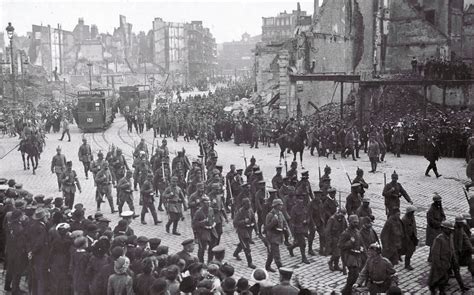
The international system is undergoing profound transformations, reflecting its shift from a unipolar hegemony to a tense multipolarity. Strategic competition between the United States and China for economic, military, and technological influence has intensified, while the confrontation between Russia and the West continues in a struggle that is redrawing the boundaries of power and influence within the international system. This shift is reminiscent of the pre-1914 era, when rivalry between major empires led to opposing alliances and open conflicts that culminated in a devastating world war.
A Global Arms Race Without Limits
The development of military capabilities is accelerating at an unprecedented pace, particularly in the areas of strategic missiles, military artificial intelligence, cyber warfare, and space technologies. This race reflects a traditional logic in international relations that military superiority is the primary guarantor of security—the same logic that fueled the arms race before World War I.
However, the danger of the current race lies in its technological nature. A technical error or miscalculation can lead to catastrophic consequences within minutes, not years as in the past.
The Middle East: A Testing Ground for International Balances
In this tense global landscape, the Middle East stands out as one of the most sensitive regions in international conflict, where the interests of major powers intersect and regional influence projects clash. Iraq occupies a unique position in this equation, representing a crossroads of international and regional conflicts and an arena for competition between major and regional powers alike. The fragility of its internal balances, the overlapping influence of external powers, and its transformation into a proxy battleground mean that any internal or regional escalation has the potential to produce repercussions that extend far beyond its geographical borders.
The ongoing crises in the region—from armed conflicts to tensions in vital maritime routes—reflect a state of strategic tension remarkably similar to the international environment preceding World War I, where limited regional conflicts triggered a full-blown global confrontation.
Deterrence: Prevents War… or Postpones It?
Despite these alarming indicators, the contemporary international environment differs fundamentally from the past. Nuclear deterrence imposes a coercive balance that makes all-out war a prohibitively costly option for all parties, and global economic interdependence links the stability of major powers to one another in an unprecedented way.
However, these factors may not prevent conflict so much as they reshape it into proxy wars and indirect conflicts, a pattern that is becoming increasingly evident in regions like the Middle East. A Global System Without Stable Balance
The fundamental dilemma facing the world today is not the inevitability of war, but rather the absence of a stable international balance capable of managing competition between major powers. The international system is undergoing a turbulent transitional phase, in which the rules of the old order are eroding without clear new rules emerging.
In such historical phases, strategic errors and miscalculations become decisive factors in igniting major conflicts, as the experiences of the 20th century have demonstrated.
The World Faces an Existential Test
The most dangerous aspect of the current phase is that the world now possesses unprecedented destructive power, at a time when hotspots of tension are increasing and strategic calculations are becoming more complex. While major powers strive to manage their conflicts without sliding into a full-blown confrontation, the risk of explosion remains present within an international system lacking stable balance.
The crucial question remains: Will international powers learn from the lessons of history, or is the world approaching a new historical moment that will reproduce the catastrophe of 1914 in an even more dangerous form?